
Online Slots Not on GamStop: How They Work
 Available in GB
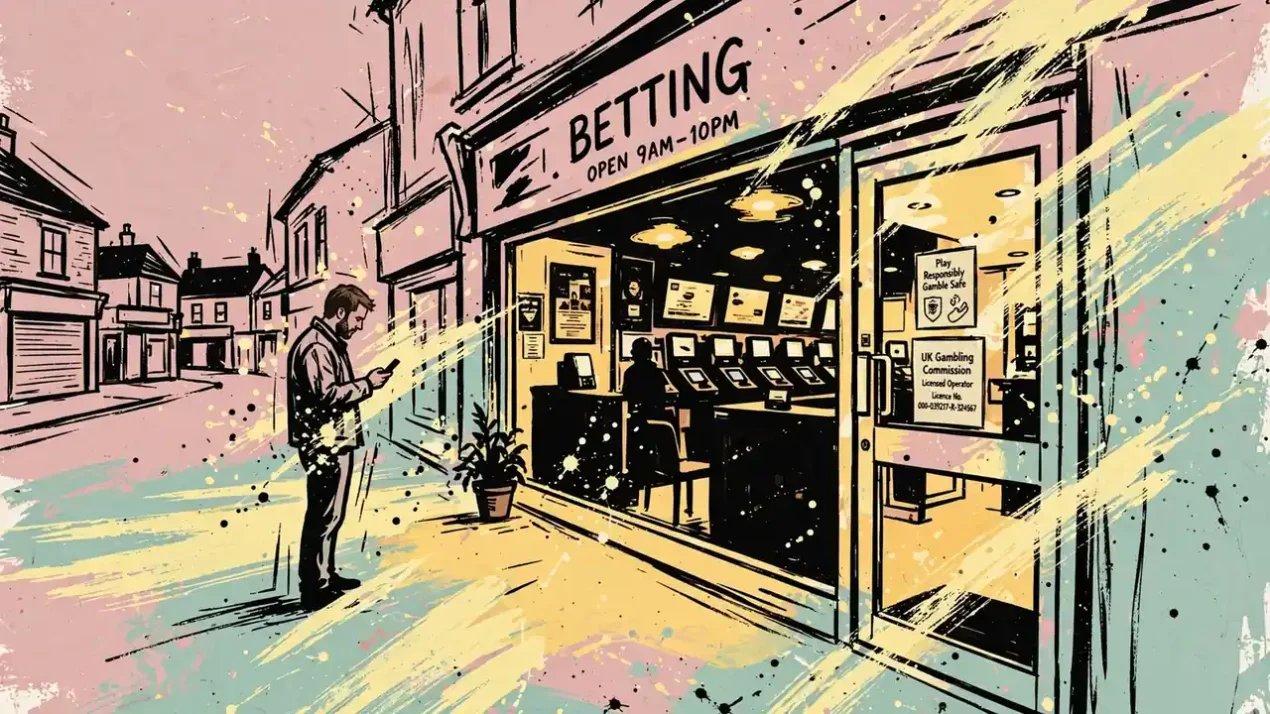
GamStop applies to participating UKGC-licensed operators, not individual slot games; sites outside that framework are not required to connect.
What “Not on GamStop” Means for Online Slots
“Not on GamStop” describes a casino that does not take part in the UK’s self-exclusion scheme. For online slots, the phrase is about the operator’s relationship with GamStop, not a special category of game. A slot does not become part of, or exempt from, the scheme by virtue of its title or features; what matters is which operator provides it and whether that operator falls within the UK Gambling Commission’s system.
GamStop is linked to operators licensed by the UK Gambling Commission (UKGC). A UKGC-licensed online casino must participate, so a person registered with GamStop is barred from gambling with those participating businesses for the chosen exclusion period. The scheme works across the licensed operators that are required to use it; it is not a filter applied to individual slot games.
The distinction becomes important when a casino is licensed outside the UK. A non-UK operator is not within the UKGC’s regulatory reach and is not required to connect to GamStop. Such casinos do not pass player data to the service or apply its exclusion instructions. That is why a site may describe its slots as “not on GamStop”: it is indicating that the operator sits outside the scheme, not that GamStop has removed a restriction or authorised a different route to play.
This distinction should not be confused with the rules for serving customers in Britain. Remote gambling operators offering services to people in Great Britain are required to hold a UKGC licence, regardless of where the business is based. A casino with a foreign licence but no UKGC licence is outside the UKGC framework; the fact that it may be reachable online does not make it a UK-licensed casino or bring it into GamStop.
Searches for slots not on GamStop can therefore blur two separate questions: whether a game is available on a site and whether that site is part of the UK self-exclusion system. A game provider may supply titles to more than one operator, but GamStop participation is determined by the operator’s licensing and obligations, not by the game provider. The same distinction applies to searches for particular providers’ slots or for features such as bonus buys. The wording does not establish that a specific game is available, nor does it change the regulatory status of the site hosting it.
Casino Sites: UK Options and Key Differences
If you are currently registered with GamStop, a site’s absence from the scheme is not a way to end or suspend your self-exclusion. It means the site does not enforce that registration through GamStop. Treating the gap as permission to continue gambling would confuse the limits of the service with the purpose of the restriction. This section explains the regulatory distinction; it is not a recommendation to use a site outside the scheme.
There is also a difference between being able to access a website and having the protections that come with a UKGC licence. A non-UK casino may operate under another jurisdiction’s rules, but those rules do not make it part of the UKGC system, and they do not oblige it to honour a GamStop registration. The label “not on GamStop” therefore says something narrow: the operator is not connected to the UK exclusion service. It does not, by itself, tell you that the site is authorised to serve British customers or that its protections match those required of UKGC-licensed operators.
For anyone reading about online slots not on GamStop in 2026, the central point is the same: GamStop’s reach follows the UKGC licensing framework. Participating operators must apply the exclusion, while casinos outside that framework do not receive or act on GamStop registrations. That boundary explains the phrase, but it should not be mistaken for a loophole or an endorsement.
Best casino sites in the UK
- NightWinBonus: £900 + 400 free spins · Payout speed: 1-3 business days
- DieselwinBonus: Welcome Pack 250% up to £4000 + 200 FS · Payout speed: 1-3 business days
- ChanzeBonus: Slots Welcome Bonus #1 200% up to €500 · Payout speed: 1-3 business days
- Revery PlayBonus: 100% up to€1,000+ 100 FS · Payout speed: 1-3 business days
- SlotoSportBonus: 500% up to £ 10 200+ 777 FS · Payout speed: 1-3 business days
- NightLuckBonus: Welcome Pack + 805% Up To 6400€ + 280 FS · Payout speed: 1-3 business days
- ZombillionBonus: Welcome Pack 250% up to £4000 + 200 FS · Payout speed: 1-3 business days
- x3betBonus: Welcome Pack 100% Up to £1.000 + 200 Free Spins · Payout speed: 1-3 business days
How Slot Games and Bonus Terms Fit Together
A slot promotion can look generous while leaving important conditions outside the headline. The offer might add funds to a deposit, provide spins on selected games, or combine the two. What matters is not only what you receive but what you must do before bonus-related winnings can be withdrawn. Read the terms as part of the offer, rather than treating them as small print to check after accepting.
Regulatory Status
Determined by operator licensing, not game type
GamStop Relation
Non-UK operators are not connected to the scheme
Key Distinction
Accessibility does not equal UKGC authorisation
This is especially important when comparing slot offers at casinos not on GamStop. Promotions are set by individual operators, and their wording does not tell you whether a site is authorised to serve customers in Britain. A bonus is not evidence of regulatory oversight or a substitute for consumer protections. Nor should a promotion be used as a reason to register while a GamStop self-exclusion is active.
What a slot offer may include
A deposit bonus adds promotional funds after you make an eligible deposit. The terms may specify how much of the deposit qualifies, whether the bonus must be claimed, and whether the offer is restricted to particular games. A free-spins offer gives you a set of spins under its own conditions. It may apply only to named slots, and winnings from those spins can be treated differently from ordinary cash winnings.
Some promotions combine free spins with a deposit bonus. That can mean two sets of conditions apply at once: one for the bonus funds and another for the spins or the winnings they produce. Check whether the requirements are linked or separate, which balance is used first, and whether completing one part affects the other. If the terms are unclear about how the offer works, the headline alone is not enough to make an informed choice.
Online Casinos with No Sister Sites in the UK
“Free” does not necessarily mean withdrawable. Free-spin winnings may be credited as bonus funds, restricted to a bonus balance, or made subject to wagering before withdrawal. The rules should explain whether winnings from spins count towards a wagering requirement and which games qualify. If the operator does not make that clear before you opt in, you cannot sensibly calculate what the offer would require.
Promotions can also differ in whether participation is automatic or optional. If you can decline an offer, consider doing so when its conditions are not acceptable. Accepting a bonus may change the rules that apply to your play, including what happens to winnings and how much you can stake. Avoid assuming that a promotion can simply be removed later without affecting your balance.
How wagering requirements work
A wagering requirement tells you how much qualifying play is needed before bonus funds or associated winnings become eligible for withdrawal. It is commonly written as a multiple. The important detail is what that multiple applies to: the bonus alone, the deposit and bonus together, or another defined amount. Those different bases can produce very different totals.
For illustration, a requirement attached to the bonus alone is not calculated in the same way as one applied to the combined deposit and bonus. Before accepting, find the stated basis and work out what it means in the offer’s own terms. If the wording says only that “wagering applies” without defining the calculation, ask the operator to clarify or decline the promotion. A number without its base is not a complete explanation.
Slot Promotion Components
A slot promotion can involve several different elements that work together.
- Deposit Bonuses: Funds added after an eligible deposit.
- Free Spins: A set of spins under specific conditions, often tied to named slots.
- Combined Offers: Promotions that include both deposit bonuses and free spins, often with separate sets of conditions.
A specialist review source describes wagering requirements in the 30x to 40x range as an industry average and characterises requirements above 50x as generally predatory. Treat those figures as an assessment, not a guarantee that a particular offer is fair or suitable. The multiple by itself does not tell you the total play required, because that depends on the amount to which it applies, eligible games and any other restrictions. A lower-looking multiple can still be burdensome if it applies to a larger base.
Wagering is not the same as a promise that you will eventually reach the required total. It describes a condition, not an outcome. Play can use up a balance before the requirement is met, and there may be a deadline. Consider whether you can accept losing the money you deposit without relying on bonus winnings or expecting to recover losses through further play.
Game weighting and eligible play
Game weighting determines how much a particular game contributes towards a wagering requirement. A slot might count fully, partly or not at all under an offer’s rules. Table games may contribute less than slots, or may contribute nothing. The terms should therefore identify eligible games and explain how their contributions are calculated.
Do not infer that every slot on a site qualifies simply because the promotion is described as a slot bonus. The operator may limit an offer to selected games, exclude certain titles, or set different contribution rates across game types. If you switch to a game that contributes less, the balance may still be used while progress towards the requirement slows. A contribution rate can matter as much as the wagering multiple.
Online Casino No Registration UK: What It Means
Check whether the rules distinguish between the game used and the type of balance being played. A slot may count towards wagering only while you are using bonus funds, for instance, or a particular free-spin offer may be tied to one named game. The terms may also say that certain games are excluded while a bonus is active. Read the exclusions before playing, since a breach can affect whether winnings remain eligible for withdrawal.
The clearest terms specify the games covered, the contribution each makes, and whether those rules differ for free spins and deposit bonuses. If the operator provides only a general statement that “slots count,” that may not settle whether a particular game qualifies or how much it contributes. Do not assume that a progress bar tells the whole story; it may show progress without explaining which bets were counted.
Bet limits and other restrictions
A maximum bet limit sets the largest stake allowed while a bonus is active. Specialist reviews report that promotion terms may include such a cap, alongside other conditions. Check whether the limit applies to each spin, each game or another unit defined by the operator. Also check when it starts and ends: a restriction might apply throughout wagering, including after the bonus funds have been spent but before the requirement is complete.
DO
- Read the full terms as part of the offer
- Check the specific basis for wagering requirements
- Verify if game weighting applies to your play
DON’T
- Assume a promotion is a substitute for regulation
- Use a bonus as a reason to ignore self-exclusion
- Assume a lower multiple is always better without checking the base
A bet that exceeds the stated limit can have consequences under the offer rules. The terms may say that winnings are voided or that the promotion is removed, so do not assume that an unusually large stake is merely ignored. If there is any uncertainty about whether a particular action breaches the rule, get a clear answer before playing. Keep a copy of the terms that applied when you accepted the offer; promotional wording can be difficult to reconstruct later.
Bonuses can impose restrictions beyond the headline wagering requirement and bet cap. Look for rules on eligible deposits, excluded payment methods, whether you may have more than one promotion active, and what happens if you cancel or withdraw before completing the terms. Such conditions can affect the bonus balance or related winnings. A promotion with clear, accessible rules is easier to assess than one where material conditions are scattered or ambiguous.
Deadlines and withdrawal caps
An offer may set a deadline to meet its wagering requirement. Specialist reviews report that deadlines can form part of bonus terms, so identify the start point as well as the end point. The clock might begin when the offer is credited or when you first use it; the wording should say which. If the requirement is not completed in time, the terms may provide for the remaining bonus or associated winnings to be removed.
Non-GamStop European Casinos: What UK Players Should Know
Do not confuse a deadline for claiming an offer with a deadline for completing wagering. They are different conditions. Check whether a free-spins offer has its own expiry and whether winnings from those spins then face a separate wagering period. When more than one promotion is involved, write down which deadline applies to each part rather than assuming that all terms run together.
A maximum withdrawal cap limits how much can be withdrawn from bonus-related winnings, even after other conditions are met. Specialist review material reports that such caps may appear in bonus terms. Find out whether the cap applies to all winnings linked to the offer or only a defined portion, and whether it applies before or after wagering. A cap can materially change the value of an offer, so it should be assessed alongside the bonus amount and the play required.
Read the rules for what happens to any balance above a cap. If the wording does not explain how the operator calculates the amount, seek clarification before accepting. Do not treat a displayed balance as proof that the whole sum will be withdrawable: bonus funds, winnings subject to wagering and cash balances may be handled differently under the promotion.
A practical way to compare offers
A useful comparison starts with the full set of conditions, not the largest advertised bonus. For each offer, identify:
- whether it is a deposit bonus, free spins, or a combination;
- what amount the wagering multiple applies to;
- which games count and how much they contribute;
- any maximum bet while the promotion is active;
- the deadline for claiming or completing the terms; and
- whether a cap limits bonus-related withdrawals.
Then ask whether the conditions are clear enough to calculate what you would need to do and what could be lost. If the answer depends on information the operator has not provided, that uncertainty is itself relevant. You do not have to accept a promotion just because it is available.
Keep the offer terms in the form you saw them, including any game exclusions and later changes shown before acceptance. If a dispute arises, precise records are more useful than a memory of the headline. Still, a well-described promotion does not establish that the casino is legally authorised to serve customers in Britain or offers protections equivalent to those required under the UK Gambling Commission framework. Bonus terms explain the deal; they do not settle the separate question of the operator’s status.
What to Check Before Using a Non-GamStop Slot Site
The phrase “not on GamStop” describes a site’s relationship with the UK self-exclusion system; it does not establish that the operator is authorised to offer gambling to people in Britain. A casino may hold a licence issued elsewhere and still fall outside the rules that apply to operators serving the British market. Those are separate questions, and a foreign licence is not a substitute for a UK Gambling Commission (UKGC) licence.
Licence Verification
Always use a regulator’s own public register to confirm an operator’s credentials rather than relying on website badges.
The legal distinction matters. Remote gambling operators offering services to customers in Great Britain must hold the relevant UKGC licence, wherever the company is based. An operator that serves UK residents without one is acting illegally. That does not mean that a player commits a criminal offence simply by using a site that is not on GamStop; the stated legal responsibility is on the operator. But the absence of criminal liability for the player should not be mistaken for UK regulatory protection.
Check what the licence actually covers
A non-UK casino may be licensed in a jurisdiction such as Malta, Gibraltar or Curaçao. The name of a place or regulator on a website is only a claim until you confirm it. Look for the operator’s legal name, licence reference and the regulator said to have issued the licence. Then use that regulator’s own public register or licence-checking service to see whether the details match.
Check the legal entity, not only the casino’s trading name. A licence may belong to a company with a different name from the brand shown on the site. Confirm that the register identifies the same entity and that the licence status is current. If the regulator’s register does not show the operator, or the details conflict, treat the claim as unverified rather than assuming the site is licensed.
A foreign licence means the operator is answerable to that jurisdiction’s rules, not that it has permission to serve the British market. A regulator’s oversight may also offer different remedies and standards from those under the UKGC. Do not treat a licence from a less established authority as equivalent protection. A badge in a footer is not proof of either UK authorisation or effective recourse if a dispute arises.
Attention A foreign licence does not grant an operator permission to serve the British market or provide UKGC-level protections.
Understand the limits of protection
UKGC-licensed operators must follow the requirements of the British regulatory framework. A site outside that framework does not provide the consumer protections associated with a UKGC licence. Its own terms and the rules of its licensing jurisdiction may govern complaints, account decisions and disputes, leaving you without the same route to UK regulatory oversight.
This difference can become practical when something goes wrong. A site’s customer-service response is not the same as independent regulatory oversight, and a licence elsewhere does not give the UKGC authority over that operator. Before relying on a complaint process, establish which legal entity runs the site, which regulator oversees it, and what process that regulator offers. If you cannot identify those details clearly, you cannot make an informed assessment of where a complaint would go.
Nor does the label “new” establish that a site has been checked or has a reliable record. A recently launched brand may be operated by an established company, or it may not; the label alone tells you neither. Apply the same licence checks regardless of how long a site has been online, how prominently it presents its credentials or how confidently it describes itself.
Do not confuse access with authorisation
Some sites based outside Great Britain may be accessible to UK visitors. Accessibility is not permission for the operator to serve them. The fact that a page loads, accepts an account registration or describes itself as available to British users does not establish that the operator holds the licence required for that market.
Likewise, the fact that a site does not participate in GamStop says nothing by itself about whether its licence is genuine, whether it may legally serve UK customers or what protections it offers. These checks answer different questions. GamStop status concerns participation in a self-exclusion system; licensing concerns the operator’s authority and the rules under which it operates.
If a site states that it has a UKGC licence, verify that claim directly in the Commission’s register rather than relying on a logo, a search result or the operator’s wording. If it has only a foreign licence, do not read that as UKGC approval. Under the British rules, operators offering remote gambling to Great Britain consumers need the appropriate UKGC licence even when they are headquartered abroad.
This section is not a recommendation of any particular site. No brand name, licence badge or “top” label can replace checking the underlying operator and regulator. A careful check may establish what licence a company claims to hold and whether a regulator’s register supports that claim; it cannot make a site operating outside the UKGC framework equivalent to one regulated in Britain.
Real-Money Play, Payments and Withdrawal Checks
Depositing real money at a site that is not on GamStop involves more than choosing a payment method. Payment processing and account verification are separate from licensing: a deposit going through, or a withdrawal being approved, does not show that the operator is authorised to serve customers in Great Britain. A site’s payment options are not a substitute for checking its regulatory status.
Payment and Verification
- Check which methods work for both deposits and withdrawals
- Confirm any processing fees or currency conversion rules
- Verify your identity (KYC) early to avoid withdrawal delays
- Ensure account names match your payment details
Before depositing, read the payment terms and check which methods can be used for both deposits and withdrawals. Look for any stated processing stages, possible fees, currency conversion and conditions on the account name. A method available for deposits may not be available for withdrawals, and a payment provider’s involvement does not guarantee that a casino will release funds without further checks.
A specialist review describes e-wallet withdrawals as generally faster than card withdrawals, while noting that casino processing can take up to 24 hours. Treat that as a reported comparison, not a promise about an individual site or transaction: the operator’s checks and the payment provider’s handling can affect the total wait.
Cryptocurrency adds a distinct risk. A specialist review notes that a withdrawal may be processed quickly, but the value of the funds can change with the cryptocurrency’s market price. A transfer to a wallet address is also irreversible; if you enter the wrong address, the funds may be permanently lost. Check the address and network carefully before confirming, and consider whether you are prepared for the value to move before converting or spending the funds.
KYC, short for “know your customer”, is the process of confirming your identity and account details. A specialist review advises completing verification early to reduce the chance that it will hold up a withdrawal. Read the operator’s instructions and submit only the documents requested through its stated secure channel. If names or payment details do not match, ask the operator what needs resolving before depositing rather than assuming the issue can be fixed at cash-out.
These checks do not establish whether a casino is licensed. Equally, a licence does not guarantee that a particular payment will be immediate or that an account review will not occur. Keep records of deposits, withdrawal requests and correspondence, and do not send additional money in response to an unexpected demand without checking its basis. If the payment terms are unclear, or you cannot find a clear explanation of verification and withdrawals, pause before transferring funds.
GamStop Self-Exclusion Is Not a Slot-Site Filter
GamStop is a self-exclusion commitment, not a setting that follows you only while you browse a particular slot site. Once you register, participating gambling businesses must block you for the period you selected. The available periods are six months, one year or five years. During that time, you cannot end the exclusion early or cancel it.
That distinction matters when you see references to slots not registered with GamStop. The phrase describes sites that do not take part in GamStop; it does not mean your existing registration has been removed, paused or changed. Registering with another operator cannot shorten the commitment you made through the service. The original exclusion remains in place at participating sites until its selected term has run its course.
Understanding GamStop
- GamStop is a commitment to participating businesses, not a filter for all sites.
- Using a non-participating site does not end your existing self-exclusion.
- A site’s absence from the scheme does not mean it is authorised to serve UK customers.
- The exclusion period remains binding at all participating operators until it expires.
You may encounter claims about online slots not registered with GamStop UK as though they were simply another way to access games during an exclusion. That framing leaves out the central point: using a site outside the scheme does not undo the restriction. It may instead put you outside the protections attached to a UK Gambling Commission licence. This section explains what the exclusion does and what it does not do; it is not advice on how to get around it.
What the selected period means
When you enrol, the period you choose sets how long the participating sites must exclude you. GamStop’s options are six months, one year or five years. The selection is not a cooling-off setting that can be reversed if you change your mind. The exclusion cannot be shortened or cancelled before the term ends.
In practical terms, a person who chose a longer period remains excluded for that full period, even if circumstances change. Trying to open another account, using different contact details or looking for a site that does not participate does not alter the registration with GamStop. Nor does the fact that a different business may not be connected to the scheme change the status of the existing exclusion.
The service is therefore not a filter that can be switched off by changing devices, websites or account details. It is a commitment with a defined end point. If you registered because gambling was causing harm or felt difficult to control, treating a gap in coverage as permission to resume play can undermine the reason you set the restriction in the first place.
Why a non-participating site does not end the exclusion
A site outside GamStop may not receive or act on your GamStop registration. That is a limit of the system’s reach, not a cancellation of your self-exclusion. The difference is easy to miss: the site may not block you, but GamStop has not released you from the period you chose.
Non-GamStop Curacao Casino Sites: Licence Checks
This is why terms such as “slots that are not registered with GamStop” can be misleading. Games themselves are not what the service registers; it is gambling businesses that participate in the scheme. A particular slot title does not carry an individual GamStop status that can override your account-level exclusion. If a site is not part of the scheme, playing there does not change your position with the participating operators.
It is also important not to confuse being able to create an account elsewhere with being free of the restriction. Access and eligibility are different questions. An operator’s registration process, or its failure to identify an existing exclusion, does not amend the self-exclusion you already made. A workaround can create further risks without solving the underlying issue.
Some accounts of ways to get around GamStop describe using another person’s details, anonymising tools or payment methods that may involve limited identity checks. These should not be treated as dependable or legitimate ways to resolve an exclusion. Using another person’s identity can expose both people to serious account and financial problems, while concealment does nothing to change the selected period. The relevant point is not how a workaround might operate, but that it leaves the original self-exclusion intact.
When the period ends
The end of the selected term is different from an early cancellation: the commitment remains binding until that point. When it has ended, that does not require you to gamble again or mean that resuming play is advisable. You can continue to avoid gambling if that is safer for you.
If you are looking for slots not registered with GamStop because you are currently excluded, pause before acting on that impulse. The exclusion cannot be shortened, and registering elsewhere will not remove it. If you are struggling to maintain the decision, consider speaking with someone you trust or seeking help rather than trying to find a route around the restriction.
Limits and Support Outside the UKGC Framework
Is it safe to play at non-GamStop gambling sites?
Not necessarily. Sites outside the UKGC system do not provide the consumer protections associated with a UKGC licence, although some may offer limits and reminders voluntarily.
Can I reverse a self-exclusion from GamStop early?
No. You cannot shorten or cancel a GamStop exclusion before the period you selected has ended.
Are casinos that bypass GamStop illegal for UK players to use?
Playing at a non-GamStop casino is not a criminal offence for you. However, an operator offering gambling services to UK residents without a UKGC licence is acting illegally.
How can I verify a casino’s licence is genuine?
Check whether the casino holds a UKGC licence: operators offering gambling services to UK residents must have one. A licence from another jurisdiction does not make the casino UKGC-licensed or part of GamStop.
Is it legal to play in casinos not blocked by GamStop?
It is not a criminal offence for you to play at a non-GamStop casino. But an operator serving UK residents without a UKGC licence is acting illegally, and sites outside that framework do not provide the same consumer protections.
Related posts

Terms of Use

UK Gambling Casino Sites and Online Slots