
Online Slot Payout Percentages: What RTP Means
 Available in GB
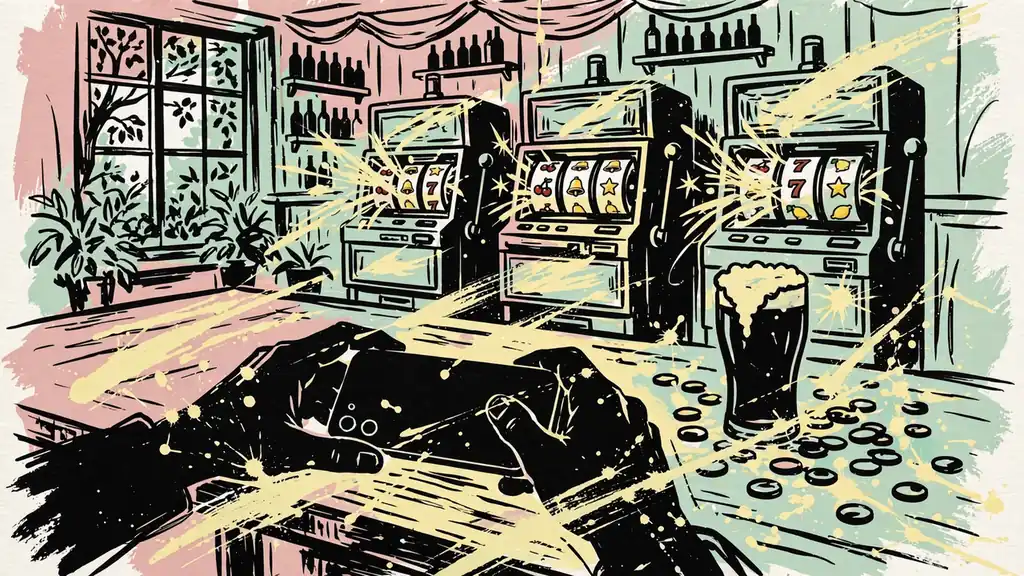
RTP describes a game’s theoretical long-run returns, not a guaranteed result for an individual spin or player.
What a Slot Payout Percentage Actually Measures
A slot’s payout percentage is usually described as its return to player, or RTP. The figure expresses a theoretical relationship between the money staked on a game and the amount the game is designed to return as winnings over a very large number of plays. It is a property of the game’s mathematical design, not a promise about what will happen to your balance.
If a game displays an RTP, read it as a long-run model. The calculation considers the possible outcomes and their probabilities, including how often wins occur and how large they may be. Taken across an enormous volume of play, the total returned is expected to approach the proportion represented by that figure. The word “expected” matters: it describes the behaviour of the model over time, not a result the game must deliver within a particular period.
That distinction is easy to lose when the number is presented as a simple percentage. It can look like a rate that applies to each spin, or a share that will be returned to every player. Neither reading is correct. A spin produces one outcome. An RTP describes the combined theoretical effect of many outcomes repeated on a scale far beyond an ordinary playing session.
Why a session does not follow the percentage
An individual session is too short to make a game’s long-run return visible. You might receive winnings that exceed your stakes, or finish with less than you put in. You might also see a mixture of wins and losses without the final balance matching the advertised RTP in any obvious way. None of those results, by itself, proves that the game is operating outside its stated model.
The reason is variation. A slot can have many possible results, and the size of a win can differ sharply from one outcome to another. A run of spins may contain no notable win; another run may include a large one. The RTP does not say when those outcomes will occur, how much any one player will win, or how many spins are needed for a particular result. It does not schedule returns.
Best Low Volatility Slots UK: How They Play
Think of the figure as describing a broad pattern, not a personal forecast. If a slot’s theoretical return is used to model a vast amount of play, the total results may tend towards the designed proportion. But a real player encounters only a small part of that possible history. Their experience can sit well above or below the long-run figure, and the percentage offers no way to know in advance which.
What “long run” means
“Long run” is not a defined session length. It does not mean that a game owes you a win after a losing stretch, or that continued play will bring your balance closer to the stated return. Each spin is governed by the game’s design; a previous outcome does not create a future entitlement. A sequence of losses is not a signal that a win is due.
Likewise, a run of wins does not establish that the game will continue paying at the same pace. The RTP is not a live meter that adjusts after each spin to correct a player’s results. It is a theoretical measure of the game as a whole. Treating it as a short-term target can turn a descriptive statistic into a mistaken reason to keep playing.
The number also does not tell you how often you will see a win. Two games could have the same theoretical return while distributing their possible winnings differently: one might produce smaller wins more frequently, while another might have more of its return associated with less frequent, larger outcomes. The RTP alone cannot explain that pattern. Nor does it tell you whether a particular session will contain any winning spin.
For that reason, “payout percentage” should not be read as a personal payout rate. It is not a promise that a set share of your own stakes will come back, and it is not a reliable way to estimate what you will leave with. It describes a mathematical expectation across repeated play, while your session is one sequence of outcomes.
RTP
A theoretical relationship between the money staked on a game and the amount the game is designed to return as winnings over a very large number of plays.
The role of the game’s settings
An RTP figure belongs to a particular game configuration. Where a game is offered in different versions or with different settings, a figure for one version should not automatically be assumed to apply to another. The title alone may not settle which mathematical configuration you are playing. The relevant information is the one attached to the version made available to you.
Even when the applicable figure is clear, it remains a theoretical value rather than a forecast. It does not account for the choices you make about how long to play or how much to stake, and it cannot convert those choices into a guaranteed result. A larger stake may change the amount at risk on each outcome, but it does not make the RTP a promise to return a matching share during your session.
In the UK, online slots are subject to rules about how games operate, including limits on stake size and the time between game cycles. Those rules do not change what RTP means: it remains a long-run theoretical measure, not a personal guarantee. The practical point is less dramatic than the percentage can make it seem. A stated return tells you something about the game’s design; it cannot tell you what your next spin, or your session, will pay.
Casino Games: Slots, Table Games and Live Play · Online Casino Without ID in the UK: What It Means
Best casino sites in the UK
- NightWinBonus: £900 + 400 free spins · Payout speed: 1-3 business days
- DieselwinBonus: Welcome Pack 250% up to £4000 + 200 FS · Payout speed: 1-3 business days
- ChanzeBonus: Slots Welcome Bonus #1 200% up to €500 · Payout speed: 1-3 business days
- Revery PlayBonus: 100% up to€1,000+ 100 FS · Payout speed: 1-3 business days
- SlotoSportBonus: 500% up to £ 10 200+ 777 FS · Payout speed: 1-3 business days
- NightLuckBonus: Welcome Pack + 805% Up To 6400€ + 280 FS · Payout speed: 1-3 business days
- ZombillionBonus: Welcome Pack 250% up to £4000 + 200 FS · Payout speed: 1-3 business days
- x3betBonus: Welcome Pack 100% Up to £1.000 + 200 Free Spins · Payout speed: 1-3 business days
RTP and House Edge: Two Sides of the Same Figure
Return to player, or RTP, describes the share of stakes a slot is designed to return over a very large number of plays. The house edge describes the other side of that theoretical calculation: the share retained by the game. They are complementary terms for the same model, not separate forecasts of what will happen when you play.
If a game’s stated RTP is expressed as a percentage, its theoretical house edge is the amount needed to reach the whole stake. Conversely, if the house edge is given, the theoretical return is what remains. This relationship is useful when reading different descriptions of a game: one may emphasise player return, another the casino’s theoretical share. The wording changes; the underlying calculation does not.
That arithmetic does not mean a casino receives the house-edge share from every stake, or that a player gets the RTP share back in each session. Outcomes are not divided into neat portions on each spin. A slot can produce wins, losses and changing balances, and the result of a short run may be far from the theoretical relationship. Neither label tells you what the next spin will do.
What the figures describe
A slot machine payout percentage is another way people may refer to RTP: the proportion of stakes the game is theoretically set to return over extended play. “Payback” points to the returned share, while “hold” points to the share not returned under the same theoretical model. These expressions are easiest to understand when you check whether a stated percentage refers to players’ return or the operator’s retained share.
RTP
The proportion of stakes the game is theoretically set to return over extended play.
House Edge
The share of the theoretical calculation retained by the game.
Hit Frequency
How often a game produces a win according to its rules.
House edge is not a measure of how often a slot pays a winning combination. That is a different idea, often described as hit frequency: how often a game produces a win according to its rules. A frequent small win can still leave a player’s balance lower, while a less frequent larger win can affect it differently. The rate of winning events alone does not show how much is returned overall.
For the same reason, a “winning percentage” can be ambiguous. It might mean the share of spins that register any win, or it might be used loosely to mean the game’s RTP. Those are not interchangeable. A spin can count as a win while returning less than the stake wagered, and a game’s long-run return depends on the value of outcomes as well as how often they occur.
When you see an RTP figure, first establish what the percentage represents. If the wording instead gives a house edge or hold, it is describing the complementary share. If it refers to hit frequency, it is about how often a win occurs, not the overall proportion of stakes returned. Similar-sounding figures can answer different questions.
Why neither is a session forecast
The theoretical relationship is meaningful across extensive play, but an individual session is a small and variable sample. You might finish ahead, behind or close to where you started; RTP and house edge do not decide which. They also do not specify the size or timing of wins. Treating an RTP as a promise for your own session turns a long-run model into a personal prediction it cannot provide.
Online Casino Tournaments UK: Rules and Prizes
This distinction matters when comparing the language used on game pages. A high-sounding “payout” claim is not enough by itself: you need to know whether it refers to theoretical return, win frequency or something else. Likewise, a house-edge figure is not a statement that the casino will keep that exact share from your play. It describes the game’s theoretical design, not a settlement rule for each player.
RTP versus house edge is therefore a question of perspective, not competing methods of predicting results. RTP presents the theoretical returned portion; house edge presents the theoretically retained portion. Read either as a description of the game’s long-run structure, and keep it separate from the uncertain outcome of any particular spin or session.
Why Casino Payout Percentages Are Not a Ranking
A casino-wide payout percentage sounds like a simple way to compare operators: put the figures side by side and choose the one that returns the most. But a number is only useful when you know what it measures, how it was calculated and whether the figures being compared describe the same thing. Without that context, a ranking can look precise while saying very little about which casino offers the better prospect to an individual player.
The phrase “online casino payout percentage” can refer to different levels of information. It might mean the theoretical return attached to a particular game, a figure averaged across a selection of games, or a result calculated from activity over some period. Those are not interchangeable measures. A casino’s games may have different stated returns, and the blend of games included in an overall figure matters. So do the period covered and the method used to combine results. A percentage without those details cannot support a fair comparison.
Attention A single percentage figure without details on the period covered, the method of combination, or the specific games included cannot support a fair comparison between operators.
That is why a claim about the best casino payout percentage needs more than a headline figure. To compare operators, you would need a clear definition of the measure, a consistent way of collecting it and enough information to check that each casino has been assessed on the same basis. A figure that leaves out its scope cannot establish that one operator pays more than another. Nor does a label such as “highest payout” explain whether it refers to a game, a selection of games or the casino as a whole.
One operator, many different games
A casino is not a single slot machine with one fixed payout percentage. It offers games with their own rules and return settings. A casino-wide figure would therefore depend, at least in part, on which games are counted and how their results are combined. A simple average of listed game figures would not necessarily describe the experience across the whole casino; a calculation based on play would need to explain whose play, over what period and across which games.
This makes comparisons difficult even when a figure is presented with confidence. Two operators could both publish a percentage while using different scopes or methods. Putting those numbers into a league table would not make them comparable. It would merely give unlike measures the appearance of a ranking.
Best Bonus Buy Slots UK: Features and Costs
The same caution applies when a figure is called a slot-machine payout percentage. That phrase may sound specific, but it still does not say whether the number belongs to one named game, a group of games or a casino’s entire slots offering. The distinction matters. A percentage attached to one game cannot automatically be attributed to every slot at the same casino, and a casino-level claim cannot tell you what return is associated with each individual game.
Even a properly stated figure has limits as a comparison tool. It describes the measure it was designed to describe; it does not, by itself, establish that an operator is better overall. A casino may offer a range of games, and a single aggregate number can conceal that variation. A ranking reduces all of that to one line, often without showing what was left out.
Regulation does not create a payout league table
In Great Britain, the UK Gambling Commission is the regulator for commercial gambling. Its remit covers remote gambling offered to consumers there, even when the equipment supporting the service is located elsewhere. The Commission grants operating licences to businesses and personal licences to individuals working in the industry.
That regulatory role should not be confused with a ranking of casinos by returns. The existence of a regulator does not make every payout claim directly comparable, and a licence does not turn a casino-wide percentage into a standard measure. Regulation and comparison answer different questions: one concerns oversight of gambling activity, while the other requires consistent data about what is being compared.
The UK Gambling Commission regulates commercial gambling and grants operating licences, but this regulatory role is distinct from ranking casinos by their returns.
This is important when a page presents a “best” or “highest” casino payout as though it were an official standing. A reader should be able to see who produced the comparison, what operators were included, what the percentages cover and how the figures were derived. Without that information, there is no sound basis for treating the order as meaningful. The format of a table does not supply the missing method.
There is also a difference between a casino making a claim about itself and an independent comparison establishing that the claim is accurate across the market. The wording may be confident in either case, but confidence is not a measurement method. A useful comparison needs enough detail for you to understand what the number represents and why it can be compared with the figures beside it.
What a ranking would need to show
A credible casino-wide comparison would have to define its subject before assigning places. Does “casino payout” mean slot games only, or all games? Is the figure theoretical or based on recorded results? Which games and operators are included? What time period is covered? How are different games combined? If those points are not clear, the reader cannot tell whether two percentages are measuring the same thing.
The comparison would also need to distinguish a casino’s overall offering from the return associated with a particular game. A player choosing one slot is not choosing the average of every game in a casino. Conversely, a figure for one selected game says nothing conclusive about the operator’s full catalogue. These are separate comparisons, and moving between them without explanation can make a game-level figure appear to describe an entire casino.
Best Video Slots UK: Reels, Bets and Play
A label such as “best online casino payout percentage” may therefore promise more than the evidence can establish. To justify “best,” the comparison needs a defined field of candidates and a consistent measure applied to each. To justify “highest,” it needs a basis for showing that no omitted operator or differently measured figure would change the result. A bare percentage does neither.
This does not mean that every payout figure is meaningless. It means that its meaning depends on its scope and method. A clearly identified figure for a particular game can be read as information about that game. It should not be promoted into a casino-wide verdict unless there is a transparent, defensible way to make that broader claim.
Treat broad claims cautiously
When a casino or comparison page gives an overall payout figure, look for an explanation rather than relying on the number alone. The important details are not decorative footnotes: they tell you what has actually been measured. If the page does not state the games covered, the period or the calculation method, you cannot tell whether its percentage can be compared with another operator’s.
Be wary, too, of a ranking that gives precise positions without explaining how they were reached. A neat list can imply a level of certainty that the underlying comparison does not support. Where the methodology is absent, the ranking should be treated as a claim, not as an established order of casino returns.
Do
- Look for an explanation of the games covered
- Check the period the figure represents
- Verify the calculation method used
Don’t
- Rely on a number alone without context
- Treat a neat list as an established order
- Assume a high percentage equals a ranking
There is no reliable way to identify an online casino with the highest payout from a collection of figures whose scopes and methods are unclear or inconsistent. “Best” is not established by a large-looking percentage alone. It requires comparable evidence and a transparent basis for deciding what the number says about each operator. Without that, the responsible conclusion is narrower: the figure may describe something, but it does not prove that one casino ranks above the rest.
What an Average Slot RTP Can—and Cannot—Tell You
An average slot RTP sounds like a single useful benchmark: combine the payout percentages of online slots, then use the result to judge whether a game is generous. But an average is only meaningful once you know what has been included and how the figures have been combined. Without that information, the number can look more decisive than it is.
A collection might include every slot available from a particular operator, only games from one provider, or a selection chosen for a review. Those are different groups, so their averages would not necessarily match. The calculation also depends on whether each game counts equally or whether some games carry more weight. A headline figure without a clear method does not tell you which interpretation applies.
This matters when you look for online slots with high payout percentages. A group average cannot show that every game in the group has a similar RTP, or that a particular game is above the average. A few higher or lower figures can shift the result, while the overall number conceals the spread. If the games and calculation are not identified, the average offers no reliable basis for comparing individual slots.
Best 3-Reel Slots in the UK: How They Work
The same caution applies to claims about what percentage slots pay out. There is no single average online slots RTP that can be treated as a universal figure for every game or casino. The term may refer to a selected catalogue, a provider’s range or some other set of games. A percentage detached from its scope does not answer which slots it describes.
Nor does a stated average establish that online slots have higher payout percentages than another type of gambling. That comparison would require figures calculated on a comparable basis, covering clearly defined groups. Without that, the apparent difference may come from what was counted rather than from the games themselves.
An average can still be useful when its boundaries are clear. You should be able to tell which games were included, where their stated RTP figures came from, and how the average was calculated. You should also distinguish a published theoretical figure from observed results. Actual play across a limited number of spins can vary widely, so a short run of outcomes cannot confirm that a group average is accurate or that a particular game will reproduce it.
That is also why the question “are online slot payout percentages accurate?” needs a more precise answer than a simple yes or no. A published figure may accurately describe the theoretical setting assigned to a game, but it is not a forecast of what you will receive. An average built from several such figures adds another layer of assumptions: it depends on the selection and method used. Accuracy in the arithmetic does not make the chosen group representative of every slot you might encounter.
Summary
- An average is only meaningful if you know the specific games and calculation method used
- A group average can hide the actual spread of RTP across different games
- Do not use a group average to predict the result of your specific session
When you see an average, look for the population it describes and the method behind it. If those details are absent, treat the figure as an unsupported summary, not a dependable measure of the wider market. It cannot tell you the RTP of a game you are considering, and it cannot predict the result of your session.
Why There Is No Verified Highest-RTP Slot to Name
A claim that one online slot has the highest RTP needs more than a game title and a striking percentage. It needs a reliable basis for identifying the game, confirming its stated return and comparing that figure with other games on the same terms. Without that evidence, naming a supposed leader would turn an unverified claim into a recommendation.
RTP figures are associated with individual games, not with the word “slots” as a whole. A casino’s game catalogue may contain titles from different developers, and a title’s advertised percentage is meaningful only when it can be tied to the version actually offered. A list of slot machines with the highest payout percentage therefore needs traceable game details, not just repeated figures from promotional pages or copied lists.
That distinction matters because a percentage can look precise while leaving basic questions unanswered: which game version does it describe, where is that version available, and who confirms the figure? A comparison that cannot answer those questions does not establish which game pays the most. Nor does a high stated RTP, on its own, show what you will receive in a particular session.
There is no responsible basis for naming a highest-RTP slot without dependable, comparable information for the games being considered. The same caution applies to broad claims about casino slots RTP: a figure should not be treated as a verified property of a game simply because it appears beside its name. Where the supporting details cannot be checked, leaving the ranking blank is more accurate than filling it with plausible-sounding titles.
Best High Volatility Slots UK: Features and Risks
For a player, the practical point is straightforward: treat a “highest payout” label as a claim to verify, not as proof that a game is objectively top-ranked. A trustworthy comparison would identify each title and show the basis for its RTP figure. Without that, a named winner would offer confidence without evidence.
Payback and Hold: Reading the Share a Casino Keeps
Payback and hold describe opposite sides of a theoretical split. Payback is the portion of stakes a game is designed to return over a long period; hold is the portion it is designed to retain. Read together, they describe a model, not a promise about what will happen to your money in a particular session.
A stated slot payback percentage applies to the game and its underlying maths. It does not mean that a set share of every player’s deposits comes back, or that your results will settle at that figure after a certain number of spins. Individual outcomes vary, and a casino’s overall results are not interchangeable with the theoretical payback of one slot.
Best 5-Reel Slots UK: How They Work
Hold is often used when discussing a casino’s retained share. If the figure refers to a specific game, it is the counterpart to that game’s theoretical payback. If it refers to a wider set of gambling activity, it describes a broader measure and should not be read as the hold on every slot. The scope matters as much as the label.
For a reader comparing figures, the useful questions are what activity the percentage covers and whether it is theoretical or based on recorded results. A game’s stated payback may help explain its design, while a casino-level hold figure, if published, concerns a different unit of measurement. Treating the two as direct measures of the same thing can make a precise-looking number misleading.
Neither term tells you what a particular play will return. They describe how a share is framed, not an individual result.
Related posts

Terms of Use

UK Gambling Casino Sites and Online Slots