
Top Casinos That Accept Direct Banking: What to Know
 Available in GB
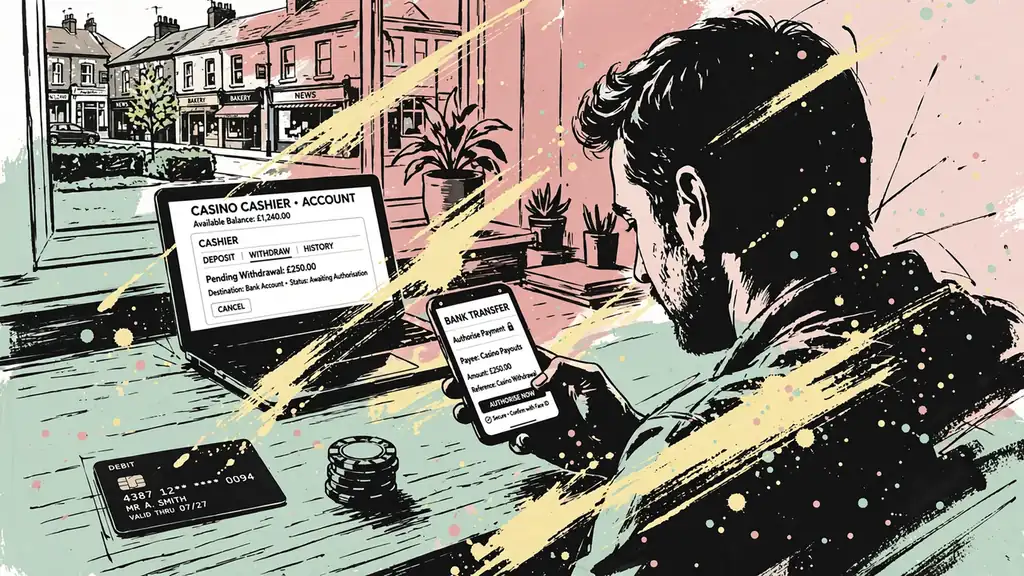
See how Open Banking links a casino cashier to your bank, and what to check before depositing or waiting for a withdrawal.
How Open Banking Connects Your Casino Account to Your Bank
“Direct banking” is a broad label in casino cashiers, not a precise description of one payment system. It can refer to a payment that starts from your bank account through an Open Banking service, or to a conventional bank transfer. Those routes both involve a bank, but they do not connect the casino to your account in the same way. The label alone does not tell you which process a site uses.
Open Banking is a framework that lets you authorise a regulated provider to access specified information or initiate a payment from your bank account, with your permission. For a casino deposit, the payment provider acts as the link between the cashier and your bank. You select the bank-payment option, identify your bank and approve the request through the bank’s own sign-in or authorisation process. The payment is then initiated from your account; you are not handing the casino your online-banking password.
That distinction matters. With an Open Banking payment, the casino cashier can pass a payment request to a provider that communicates with your bank. Your bank verifies and authorises the instruction, and the provider returns a status to the merchant. The provider is not the casino, and your bank remains the institution holding the account and approving the payment. Exactly what information is shared depends on the permission requested and the payment service involved.
A conventional bank transfer works differently. You instruct your bank to send money to the recipient’s bank account, using details such as an account number and sort code or a payment reference. That instruction may be made through online banking, a banking app or another bank channel. The casino may display the recipient details, but the transfer itself is not necessarily launched through a connected payment service in the cashier. Processing and confirmation depend on the banks and the route used.
Casino Payments: UK Deposit and Withdrawal Methods
The practical difference is therefore not simply “bank versus no bank”. It is whether a payment provider coordinates the instruction from the casino’s checkout, or whether you make a separate transfer using the recipient’s banking details. Some cashiers use “bank transfer” and “direct banking” loosely, so the wording can be less revealing than the steps shown after you select the method. If you are asked to leave the cashier and enter the casino’s bank details yourself, that is a different experience from approving a request within a connected bank-payment flow.
A connected flow may bring you back to the casino cashier after your bank has handled the authorisation. That return helps communicate the payment’s status, but it does not mean the casino has access to your bank account or can approve transactions on your behalf. The bank still handles the authorisation step. A separate transfer, by contrast, can require you to switch to your banking service and make the payment there, then wait for the casino to recognise it.
Open Banking can also describe more than a payment. Its framework allows authorised services to access bank-account information when a customer consents. A casino payment route may use the payment-initiation side of the framework without needing broad access to account activity. Read the authorisation screen rather than treating “Open Banking” as blanket permission: it should identify the provider and explain what you are approving.
People looking for Open Banking casinos in the UK may encounter several names for similar-looking options: “pay by bank”, “instant bank payment” or “bank connect”, for instance. These labels are not proof that every route uses the same technology. A cashier may also offer a regular transfer alongside a connected bank payment, even though both are grouped under direct banking. The important distinction is the payment flow and the provider named during authorisation, not the marketing label.
A connected payment route can reduce the amount of manual bank-detail entry, but it does not remove the need for the account details to match. When your casino account and the bank account used for payment belong to the same customer, basic ownership information is less likely to create avoidable friction. A mismatch in names or ownership can prompt questions even if the bank successfully authorised the payment. That is a matter of transaction consistency, not a special advantage conferred by Open Banking.
DO
- Use a casino account and bank account that are both in your own name.
- Read the on-screen description before proceeding to identify the specific method.
DON’T
- Use another person’s account to make a payment.
- Share your security codes or login details through messages or calls.
Open Banking and bank transfers may support rapid casino deposits, and some sites also describe fast withdrawals through bank-based routes. A specialist casino review may report instant deposits or fast payouts, but that is an account of a particular service, not a promise that every casino or bank will behave the same way. The term “instant” can describe one stage of a payment rather than the full movement of money between institutions. The underlying route, bank, casino process and account circumstances all matter.
So, “direct banking” is best treated as a cashier category until you see the specific method. Open Banking generally means a consent-based connection that lets a provider initiate a payment through your bank; a conventional transfer is an instruction you send to the recipient’s account. Both draw on a bank account, but their authorisation steps, information flow and payment handling are not interchangeable. Reading the on-screen description before proceeding is a more reliable way to identify what the casino is actually offering.
Using Open Banking at an Online Casino
At an online casino that offers Open Banking, the payment journey begins in the site’s cashier. You choose the bank-payment option, enter the amount you intend to deposit and follow the instructions to connect to your bank. The exact screens depend on the casino and the payment service it uses, but the general pattern is to move from the cashier to a bank-authorisation step and then back to the casino.
TRON TRX Casino Comparison for UK Players
Before approving anything, check that the payment details and amount shown are what you expect. Bank authorisation is not the same as giving the casino your online banking password: follow the bank’s own sign-in and approval process, and do not share security codes or login details through a message, phone call or page that does not belong to the bank. If anything appears inconsistent, stop and return to the cashier through the casino’s website.
Once you approve the payment, the bank and payment service handle the transfer. The casino then updates its account records when it receives confirmation. If the cashier does not show the deposit straight away, avoid submitting the same payment again without first checking its status. A delay in the account display does not by itself tell you whether the bank has authorised the transaction or whether the casino has recorded it.
Keep the account details aligned
A straightforward setup is to use a casino account and a bank account that are both in your own name. This gives the casino and payment provider consistent ownership details to check, rather than leaving them to resolve a mismatch between the person registered to play and the person named on the payment route. It cannot prevent every check or delay, but it can reduce avoidable questions about who owns the funds.
Take care when entering your personal details during registration. A shortened name, a spelling difference or outdated account information may be enough to trigger a request to clarify that the casino account and bank account belong to the same person. If you have changed your name or your bank account details, use the current information and be prepared to explain any difference if asked. Do not use another person’s account to make a payment to your casino balance.
Keeping the account details aligned can reduce avoidable questions about ownership and make the payment trail easier to follow.
Keeping to one named account for both deposits and withdrawals can also make the payment trail easier to follow. Casinos may need to confirm where funds came from and where they should go; using a consistent route gives them a clearer record. This does not mean that every operator handles Open Banking in exactly the same way, or that a chosen bank route will always be available for both parts of a transaction. Check the cashier’s instructions and the account terms before relying on a particular arrangement.
What happens after you approve a payment
If the bank asks you to approve the transaction in its app or another secure channel, complete that step there rather than responding to an unsolicited request. When you return to the casino, look for a payment confirmation or a change in your account balance. Keep any confirmation details until the transaction is reflected correctly, especially if you need to contact the bank, the payment provider or the casino about it.
A declined or interrupted payment should be treated as unresolved until you have checked its status. The payment service may show whether it was approved, cancelled or still being processed. If the bank shows a completed payment but the casino balance has not changed, contact the casino with the transaction information instead of trying repeatedly. Repeated attempts can make it harder to identify which transaction needs attention.
Casinos That Accept Dogecoin in the UK: What to Check
The same ownership principle matters when money is paid out. UK anti-money-laundering controls commonly mean that a casino will seek to return funds through the original payment source. If you ask for payment to a different account or route, the operator may need to carry out additional checks before it can proceed. That is a safeguard against misuse, not a promise that an alternative destination will be accepted.
For a clear payment trail, use the same personal details at the casino and bank, follow the authorisation steps shown by the bank, and keep the transaction record. If a casino’s cashier does not explain how its Open Banking route works for your account, pause before paying and ask the operator for clarification.
What Direct Banking Can—and Cannot—Tell You About a Casino
Seeing Open Banking in a casino cashier tells you something specific: the site offers a bank-linked route for a payment, subject to the options available to your account. It does not establish that the casino is trustworthy, well run or suitable for you. A payment method is one feature of the cashier, not a verdict on the business behind it.
That distinction matters when comparing an Open Banking casino in the UK with other sites. A logo or payment-method list can indicate what an operator says it supports, but it cannot answer broader questions about the operator’s status, terms or customer protections. In Great Britain, remote gambling licensees serving customers must hold the relevant UK Gambling Commission licence. Confirming that status is a separate check from finding a bank payment option.
Attention The presence of Open Banking does not guarantee the operator is trustworthy or that the method is available to your specific account.
Nor does the presence of Open Banking prove that every customer can use it. Payment routes can depend on the casino’s current cashier setup and the account presented there. A method mentioned on a general information page may not appear when you log in, or may not be available for the transaction you intend to make. The practical evidence is the payment choice shown in your own account before you commit funds.
A payment label is not a quality mark
“Direct banking” can be used broadly in payment descriptions. It may refer to an Open Banking service or to a bank transfer, but the label alone does not explain how the cashier handles a particular transaction. The name is not a certification and does not tell you whether the route is active for your account.
The same caution applies when a site advertises a casino that accepts Open Banking. Acceptance says nothing by itself about how clearly the operator explains its terms, how it handles a complaint or whether its rules fit your needs. A well-known payment option can sit alongside conditions that still deserve careful reading. Convenience at the deposit stage is not a substitute for checking who is providing the gambling service.
A general payment list also needs context. A specialist review may list Visa and Mastercard among a casino’s options, but that should not be treated as confirmation that either card is currently available to every UK customer. Check the live cashier and the eligibility of your particular card product. The existence of a method on a list does not settle whether it will work for your account.
Casinos That Accept Litecoin in the UK: Payment Guide
Check the account, not just the headline
Before depositing, sign in and inspect the payment options presented to you. Look for the bank-linked route by its displayed name and read any instructions attached to it. If it is absent, do not assume that a similarly worded option elsewhere on the site means the same thing. Contacting the operator for clarification is more useful than relying on a label that may cover different payment arrangements.
It is also sensible to separate payment availability from the reasons you might choose a casino. A cashier can tell you which routes are being offered at that moment; it cannot tell you whether the casino’s rules, service or wider safeguards suit your circumstances. Those checks require attention to the operator and its terms, rather than inference from the presence of Open Banking.
For a UK Open Banking casino, the useful conclusion is therefore narrow: the cashier may offer a bank-linked way to pay, but availability is account-specific and the payment label carries no broader endorsement. Check what your own account can actually use, then assess the casino on separate grounds. A payment option can be convenient; it cannot do the due diligence for you.
Best casino sites in the UK
- NightWinBonus: £900 + 400 free spins · Payout speed: 1-3 business days
- DieselwinBonus: Welcome Pack 250% up to £4000 + 200 FS · Payout speed: 1-3 business days
- ChanzeBonus: Slots Welcome Bonus #1 200% up to €500 · Payout speed: 1-3 business days
- Revery PlayBonus: 100% up to€1,000+ 100 FS · Payout speed: 1-3 business days
- SlotoSportBonus: 500% up to £ 10 200+ 777 FS · Payout speed: 1-3 business days
- NightLuckBonus: Welcome Pack + 805% Up To 6400€ + 280 FS · Payout speed: 1-3 business days
- ZombillionBonus: Welcome Pack 250% up to £4000 + 200 FS · Payout speed: 1-3 business days
- x3betBonus: Welcome Pack 100% Up to £1.000 + 200 Free Spins · Payout speed: 1-3 business days
Deposits, Bonuses and the Meaning of “Instant”
An instant deposit describes how quickly money appears in your casino balance after you authorise a payment. It does not describe whether a bonus is available, whether you qualify for one or how quickly winnings can be withdrawn. Those are separate conditions, and a payment screen that says “instant” answers only the first question.
Understand “Instant” Deposits
“Instant” refers to the speed at which money is credited to your casino balance, not necessarily the full movement of money between institutions or the speed of withdrawals.
Open Banking payments and bank transfers can be credited instantly at some casino sites, but the timing depends on the route the operator offers and the transaction itself. A label on a cashier page is not a promise that every payment will clear immediately. If the balance does not update, check the payment status before trying again: making a second payment could leave you with two transactions to resolve.
A direct-bank deposit also does not automatically qualify for a welcome offer or another promotion. The offer’s terms determine which payment methods are eligible. Before accepting it, look for any exclusions relating to bank payments, the minimum qualifying deposit, the time window for opting in and the rules for withdrawing funds. If the terms do not clearly say whether the specific Open Banking route qualifies, ask the casino before depositing rather than relying on the payment method’s name.
A deposit and a bonus are separate decisions
A casino may accept direct banking for deposits while imposing different conditions on promotional play. For instance, a payment method can be available in the cashier but excluded from a particular offer. That distinction matters if you deposit expecting a bonus: the transaction may succeed while the promotion is not applied.
“No deposit bonus” means an offer that does not require a qualifying deposit; it does not mean that any account using Open Banking receives a bonus. Eligibility and availability remain subject to the offer’s terms. Check whether the promotion is open to your account, whether you need to claim it and what conditions apply before treating it as part of your balance.
Casinos That Accept Wirecard in the UK: Payment Guide
Payment speed and offer eligibility should therefore be checked separately. First confirm that the cashier presents the bank-payment route you intend to use. Then read the promotion’s terms for payment-method exclusions and any steps needed to activate it. A fast balance update cannot cure a missed opt-in or a method that the promotion excludes.
What “instant” leaves out
The word refers to the deposit reaching the casino balance, not to every stage around it. You still need to authorise the payment, and an operator or payment provider may need to resolve a declined or pending transaction. The description also says nothing about whether the funds are restricted by bonus terms.
A specialist review may describe Open Banking or bank transfers as capable of providing instant deposits, but that is not a guarantee for every casino, account or transaction. Treat the cashier’s current information as the practical point of reference, and retain the transaction confirmation if the balance does not change as expected. Avoid repeating the payment until you know whether the first attempt completed.
PayPal illustrates why speed and promotion rules should not be conflated: a specialist review may praise it for speed and convenience while noting that a particular offer can exclude it. That observation is not a rule for every casino or promotion. The relevant terms are those attached to the offer you are considering.
When you see an instant-deposit claim, read it narrowly: it concerns the expected crediting of a payment, not the value of a bonus or the terms for using it. Check the offer independently, and do not deposit on the assumption that a bank payment will unlock a promotion.
Checklist Before Deposition
- Check the casino’s cashier for actual availability of the bank-payment route.
- Confirm the casino holds a valid UK Gambling Commission licence.
- Verify that the bank account name matches the casino account name.
- Check the account currency setting to avoid unexpected conversion fees.
- Review terms for any exclusions regarding promotional bonuses.
How to Assess a Direct-Banking Casino Before You Deposit
A casino listing Open Banking in its payment options has not answered every practical question. Availability can depend on the account, the payment provider and the transaction you want to make. Before depositing, check the operator’s own cashier and terms rather than treating a general list of payment methods as a promise that the route will work for you.
Start with the site’s status and the account you are opening. Remote gambling licensees serving Great Britain must hold the relevant UK Gambling Commission licence. You can check the operator on the Commission’s public register; the licence number should match the company named on the site. A payment method is not evidence of a licence or of good account terms.
Check what the cashier actually offers
Look for the bank-payment option after signing in, where the cashier can show what is available to your account. The wording may identify a particular Open Banking provider rather than use the broader term “direct banking”. Read the payment instructions and any linked terms to establish whether the route is enabled for deposits, withdrawals, or both. Do not infer withdrawal support from a deposit button.
Check that the bank you use appears in the available selection and that you can complete the authorisation through the route presented. If the option is absent, or the cashier says it is unavailable, a third-party list may simply be out of date or may describe a different account setup. Do not send a payment through an alternative route unless the casino’s instructions support it.
Casinos That Accept Bitcoin in the UK: What to Check
Match the payment route to your account
Use account details and a payment route belonging to you, with names that match. When the account holder and payment source clearly belong to the same customer, basic ownership checks are less likely to create avoidable friction. A mismatch can prompt questions or delay a transaction, even where the payment itself appears to have gone through.
Before proceeding, read the cashier’s conditions for the chosen method, including any stated charges, transaction requirements and account restrictions. These details matter more than a site’s broad claim to accept bank payments. Keep a record of the route you selected and the confirmation shown; it can help you describe an issue accurately if the payment does not appear as expected.
Confirm the account currency
Check the currency selected for your casino account before making the first transaction. Some operator pages state that pounds sterling are supported, but the account setting is the detail that matters to you. If the account is set to another currency, a deposit or later payment may involve conversion. Review the rate or conversion information shown before confirming, rather than assuming that a UK bank account guarantees a sterling transaction.
For the same reason, verify card details in the cashier if you are considering a fallback. Payment listings may name Visa or Mastercard, but current availability in the UK and eligibility of a particular card product need checking at the point of payment. UK-licensed casinos cannot accept credit-card payments for gambling; a card’s brand alone does not establish that it is an eligible debit card.
Essential Check
Verify availability and terms directly in the casino cashier rather than relying on general labels.
A sensible assessment is therefore specific: the operator is licensed, the cashier presents a route your account can use, the transaction you need is supported, and the account currency and payment conditions are clear. If one of those points remains uncertain, resolve it with the casino before depositing rather than relying on a label such as “instant” or “Open Banking”.
Direct Banking in the UK: Limits and Account Controls
A direct-banking option does not set one standard deposit ceiling across UK casinos. The amount you can add may depend on the payment method, the limit applied to that method and the status of your account. A casino may set separate caps for an individual transaction, a day or a month, and those figures can differ between customers.
That makes the cashier and your account controls more useful than a generic claim that a site has “high limits”. Check the minimum and maximum shown for the direct-banking route you intend to use, and whether the casino displays a separate daily or monthly cap. If you cannot see the relevant terms before depositing, ask the operator for clarification rather than assuming that a limit shown for another payment option also applies.
Minimum deposits can also differ by payment method. A specialist casino review may quote a starting range of £10–£20, but that is not a universal threshold or a guarantee that the same amount applies to a direct-bank payment. The figure displayed by the casino for your selected route is the one to check.
Casinos That Accept Diners Club in the UK
Set a limit before your first deposit
UK Gambling Commission rules require remote gambling licensees to prompt new customers to set a financial limit before they make their first deposit. They must also provide account-level limit controls that customers can access. These controls are separate from the payment provider’s own transaction cap: one governs your chosen gambling budget, while the other may restrict what can be sent through a particular route.
Before funding a casino account, consider what amount you can afford to lose and set a limit accordingly. Use the account controls to review or manage that boundary, rather than treating the payment method’s maximum as a suggested spending amount. A larger permitted transaction is not a reason to deposit more.
If the cashier rejects a payment, check whether the issue is a route-specific cap or an account-level restriction before trying another amount. Repeated attempts do not change the limit that applies. A direct-banking casino can offer access to a bank payment route, but it does not remove the need to manage deposits through both the operator’s controls and the limits attached to the selected method.
How Open Banking Compares with Other Casino Payment Methods
An Open Banking casino payment method links a payment to your bank account, while a card payment uses your debit card details. UK casinos commonly accept debit cards, including Visa and Mastercard, but acceptance depends on the casino and the card product. Credit-card payments for gambling are not permitted at UK-licensed casinos.
Digital Wallets
Options like Skrill and Neteller sit between your bank and the casino, but availability is not universal.
Prepaid Vouchers
Options like Paysafecard are vouchers for deposits and are not a route for receiving payouts.
Card Payments
Commonly includes Visa and Mastercard, but credit-card payments are not permitted at UK-licensed casinos.
Bank payments and debit cards can both be used to fund an account, but the available routes differ between casinos. Open Banking services may also support withdrawals at some sites; the label alone does not establish that a particular cashier offers both directions. Check whether the method is listed for the transaction you intend to make.
Digital wallets sit between your bank or card and the casino, but availability is not universal. Skrill and Neteller are offered at some sites. A specialist casino review reports that these wallets may be excluded from promotions, so check the offer’s payment terms rather than assuming a wallet deposit qualifies.
Prepaid options have a different role. Paysafecard is a voucher for deposits, not a route for receiving a casino payout. That distinction matters if you want a method to handle money in both directions: a deposit-only option may require a separate withdrawal route.
The practical comparison is therefore not simply “bank versus card versus wallet”. Consider whether a method can make the transaction you need, whether it is available in your account’s cashier, and whether its terms affect promotions. An Open Banking instant deposit casino option may be useful for funding, but instant deposit capability does not by itself mean the same route is available for withdrawals.
Treat each method according to its stated function. Debit cards are a familiar deposit option; wallets provide another possible route where supported; prepaid vouchers are deposit-only; and bank-payment services may cover deposits, withdrawals or both, depending on the casino. Availability should be confirmed in the cashier before you rely on any one method.
Casinos That Accept eCheck in the UK: What to Know
Checking Payment Compatibility and Currency Before Paying
A payment method shown on a casino’s general information page is not proof that it is available to you at checkout. For direct banking, open the cashier while signed in and check whether the bank-payment route appears for your account. Availability can depend on the operator’s current setup and the details of your account, so a guide to direct banking casino sites is a starting point, not a live confirmation.
Check what the option actually does before selecting it. The cashier should make clear whether it is available for a deposit, a withdrawal, or both. If you need a particular transaction, do not infer that support for one direction means support for the other. The same applies to cards: specialist casino reviews may list Visa or Mastercard, but current UK availability and which card products are eligible need to be confirmed in the cashier. Credit-card payments for gambling are not permitted at UK-licensed casinos.
Currency is another compatibility detail, not a footnote. Some specialist pages state that GBP is supported, but confirm the account currency before your first transaction. A payment route may process a deposit in a different currency from the one you expect, leaving your bank or payment provider to convert it. The exchange rate or conversion spread can affect the amount charged or credited, even when no separate fee is obvious. Check the currency shown in your account and the amount presented for confirmation before authorising payment.
Does “instant” mean fast withdrawals too?
No, “instant” usually refers to the speed of the deposit being credited to your balance, not the speed of a withdrawal.
Can I use someone else’s bank account?
No, you should use a bank account that is in your own name to avoid ownership mismatches and delays.
Before paying, make sure the selected route matches the transaction, the account currency is clear and any displayed charges or conversion terms are acceptable. If the cashier offers several routes, compare the details for the actual payment rather than relying on a label such as “instant banking”. That description does not establish that the option is currently available to your account or that it supports the transaction you intend to make. A careful check is less exciting than a payment button; it is also the point at which avoidable surprises can still be avoided.
Open Banking Withdrawals: Speed, Verification and Delays
A quick Open Banking deposit does not tell you how quickly a withdrawal will arrive. A deposit and a payout move in opposite directions, and the withdrawal has an extra stage: the casino must approve your request before the payment provider can deliver the funds. “Instant” at the deposit screen is not a timetable for getting money back.
It helps to separate the two parts of the wait. First comes the casino’s internal review. The remote gambling licensee checks the withdrawal against its procedures and may need to resolve account or transaction questions. Only after approval does payment delivery begin. The time taken for that second stage can depend on the payment route and the banks involved, so approval does not necessarily mean the funds are already available in your account.
Verification can add time, particularly when you request your first withdrawal. If KYC is incomplete, the casino may ask you to provide or confirm information before releasing a payout. An account that has not yet been fully verified can therefore take longer to clear than one whose checks are complete. Responding promptly to a request may prevent avoidable back-and-forth, but it does not control the casino’s review queue or the bank’s processing.
A specialist review describes Open Banking and bank-transfer withdrawals as potentially fast at some casinos; that is not a guarantee for every operator or account. Check the cashier’s withdrawal terms and any stated processing stages before depositing. If a payout seems delayed, find out whether it is awaiting casino approval, verification, or payment delivery. Those are different hold-ups, and the next useful step depends on which one applies.
Casinos That Accept Boku in the UK: What to Check
An “instant banking withdrawal” should not be read as a promise of instant funds. The casino’s approval process and your verification status remain part of the journey, even when the payment route itself is quick.
Why Casino Withdrawals Usually Return to the Deposit Source
A casino withdrawal is not always a simple instruction to send winnings wherever you choose. UK anti-money laundering rules generally require a payout to go back to the payment source used for the deposit. This is known as a closed-loop approach: the money follows the route into the gambling account rather than being redirected to an unrelated destination.
That requirement helps remote gambling licensees check that funds are returning to the person and account involved in the original transaction. It also makes it harder to use a casino account to move money between people or disguise where funds came from. Returning a payout to its source is therefore a routine fraud-prevention and anti-money laundering control, not necessarily a sign that anything is wrong with your account.
For a casino that accepts direct banking, the relevant source may be the bank account or payment route used for the deposit. Keeping the account details consistent can make the intended route clearer. If you ask for a payout to go somewhere else, the casino may need additional checks before approving it. An alternative destination could be legitimate, but it is not automatically interchangeable with the original source.
Before depositing, check the casino’s withdrawal terms so you know how it handles payments made through direct or instant banking. If a payout cannot return to the original route, contact the operator and ask what verification it requires rather than attempting to route the funds through another person’s account. The same principle applies when comparing the best online casino that accepts direct banking: the payment method matters, but so does the path the casino permits for returning your money.
Why must withdrawals return to the deposit method?
UK casinos commonly return withdrawals to the original payment source as an anti-fraud and anti-money-laundering control. Using an account and payment route in your own name can also reduce ownership checks.
What is the fastest withdrawal method for UK casinos?
PayPal, Open Banking services and debit cards linked to fast payout systems are generally among the quickest options. Your payout speed also depends on the casino’s approval process and whether your account is verified.
Are fast casino withdrawals guaranteed?
No. Withdrawal speed depends on the casino’s internal approval, account verification and the payment route; even a card deposit that is instant can take several business days to pay out.
Which payment methods are accepted in Great Britain?
UK casinos commonly accept Visa and Mastercard debit cards, and some offer PayPal, Open Banking, bank transfers, Paysafecard, Skrill or Neteller. Available options vary by casino, so check its cashier.
Related posts

Terms of Use

UK Gambling Casino Sites and Online Slots